
| Hire
What does the future hold for AI in recruitment?
Artificial intelligence trends, predictions, and practical advice.

Artificial intelligence (AI) is reshaping the world of recruitment, creating new efficiencies, transforming recruiter roles, and redefining the hiring process. Nearly 40% of HR leaders have already "explored or implemented AI solutions to improve process efficiency within their organization," according to Gartner, signaling a shift that can no longer be ignored.
This evolution is not just about automating tasks; it’s about fundamentally changing the way recruiters engage with candidates, personalize outreach, and make data-driven hiring decisions.
AI can streamline recruitment marketing, enhance candidate matching, and even mitigate unconscious bias when used responsibly. However, as AI tools become more embedded in talent acquisition strategies, HR professionals must also navigate challenges, including ethical considerations, data privacy, and the risk of over-reliance on automated processes.
This guide provides HR professionals with practical insights on how to integrate AI into their recruitment strategies effectively. Readers will learn how AI-driven solutions enhance talent acquisition, reshape recruiter roles, optimize hiring team strategies, and set the foundation for a more agile and responsive hiring process.
Key benefits of using AI in recruitment
Almost 80% of HR leaders “believe that if their organization does not adopt and implement AI solutions, such as generative AI, in the next 12 to 24 months, they will lag in organizational success.” HR professionals can use leading AI platforms to achieve hiring objectives in several ways:

Enhancing human-to-human interactions
The human touch can never be replaced by automated software. AI recruitment software and productivity tools allow recruiters to focus on personal engagement and building candidate relationships. Use generative AI platforms to complete repetitive and time-consuming tasks faster — improving the hiring experience and outcomes.
Streamlining recruitment marketing
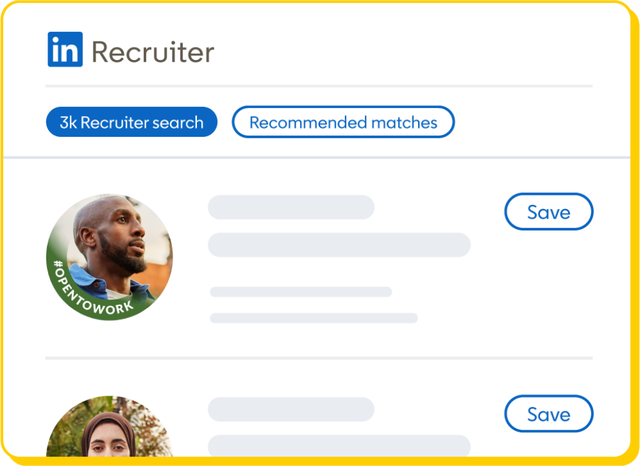
AI-powered platforms like LinkedIn Recruiter + Hiring Assistant streamline personalized content delivery, like candidate email outreach and direct messages, helping HR teams attract top talent and grow hiring pipelines. Quickly create detailed job descriptions using ideal candidate skills data, accelerating the job post process and improving accuracy.
Generative AI and boolean search tools also help recruiters enhance message personalization and assist with drafting hiring campaigns or job posts. Recruiter’s real-time LinkedIn data and insights help employers boost personalized InMail response rates, streamlining project pipelines and reducing hiring times.
Matching and ranking candidates quickly
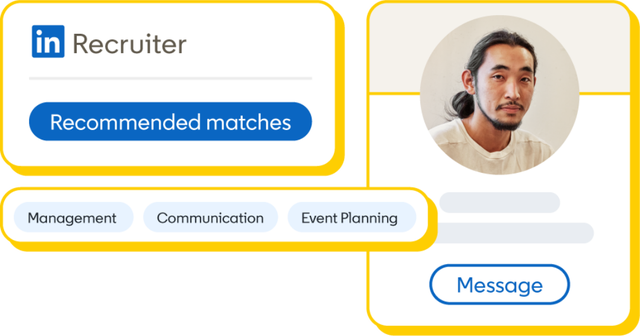
AI-powered recruiting tools help HR teams match and rank candidates by their skills, experience, and qualifications, improving recruitment efficiencies. LinkedIn Recruiter offers AI-powered Recommended Matches for user profiles similar to the candidates HR professionals have already identified. Employers can easily view and connect with these matched candidates to expand their search.

Candidates found via Recommended Matches are up to 35% more likely to accept LinkedIn InMails than those found in Recruiter searches alone.
Pros and cons of AI recruitment software
As AI continues to shape the recruitment landscape, it’s essential to weigh both its advantages and potential drawbacks. While AI-powered tools can enhance efficiency, personalize hiring strategies, and improve decision-making, they also introduce challenges related to bias, privacy, and human oversight. Understanding these pros and cons can help HR professionals make informed decisions when integrating AI into their recruitment processes.
Weigh these pros and cons before investing in AI-powered recruiting platforms:
- Pros
- Cons

Efficiency and speed
AI-powered solutions streamline workflows, significantly reducing the time required for sourcing, screening, and engaging with candidates.

Cost savings
By automating repetitive tasks, AI can lower administrative costs and reduce the overall expense of the hiring process.

Data-backed decision making
AI provides deep analytics and predictive insights, enabling HR teams to make more informed hiring choices.

Improved hiring success rates
AI tools leverage data-driven insights to match candidates more effectively, leading to better hiring outcomes.

Enhanced personalization
AI-driven tools can tailor job recommendations and outreach messages, improving candidate engagement and response rates.

Customer success story
Nestlé Purina USA decreased its days-to-fill new roles by 136% using LinkedIn Recruiter’s AI-powered tools.
Efficiency and speed
AI-powered solutions streamline workflows, significantly reducing the time required for sourcing, screening, and engaging with candidates.
Efficiency and speed
AI-powered solutions streamline workflows, significantly reducing the time required for sourcing, screening, and engaging with candidates.
Efficiency and speed
AI-powered solutions streamline workflows, significantly reducing the time required for sourcing, screening, and engaging with candidates.
Efficiency and speed
AI-powered solutions streamline workflows, significantly reducing the time required for sourcing, screening, and engaging with candidates.
Efficiency and speed
AI-powered solutions streamline workflows, significantly reducing the time required for sourcing, screening, and engaging with candidates.
Ultimately, AI in recruitment is a powerful tool, but it’s not a one-size-fits-all solution. Organizations must balance its benefits with human intuition and ethical considerations. By carefully integrating AI while maintaining a human-centric approach, companies can leverage technology to enhance, rather than replace, the recruiter’s role in building meaningful professional connections.
Clear strategies to effectively use generative AI tools
As AI evolves, HR teams must take a strategic approach to implementation so they can maximize its benefits while mitigating potential challenges.
Successfully integrating AI into recruitment requires training, thoughtful adoption, and a willingness to experiment with new tools. Here are some practical ways HR teams can get started with AI in recruitment processes:
Train HR leaders and teams to use generative AI
Recruiting teams must feel confident using AI-powered tools at scale while complying with current standards and regulations. Host regular training sessions to help employees effectively use generative AI software and AI-powered recruiting platforms as they grow in usage and popularity.
HR leaders can encourage team members to complete the “Generative AI for Recruiting Professional Certificate” by LinkedIn Learning.
Integrate AI with existing tech stacks
According to a Microsoft report, 78% of AI users brought their own AI tools to work. HR teams must set rules and guidelines for which generative AI tools are approved for work use to protect a business’s cybersecurity and data privacy.
Approved AI platforms should be easily embedded into existing recruitment technology stacks, enhancing HR team processes using advanced tools and features. Some organizations invest in building custom models and training generative AIs using retrieval-augmented generation (RAG) to improve response accuracy. Recruiters can also custom-tailor generative AI solutions to their team workflows and output needs.

Apply generative AI prompt use cases and best practices
Help HR teams write better generative AI prompts by providing a list of pre-written examples, use cases, and best practices. For example, recruiters can create job descriptions faster and easier using an effective prompt.
Consider this prompt from our post, “8 Generative AI Prompts Every Recruiter Should Have in Their Back Pocket.”
Act as a seasoned recruiter and write a detailed job description for a Content Marketing Manager position at LinkedIn. The ideal candidate should have at least ten years of experience and a university degree in communications or journalism. Summarize the role’s key responsibilities, such as developing effective B2B content strategies and writing compelling stories that inform target audiences and convert prospective customers into buyers. Highlight the company’s commitment to innovation, work-life balance, and professional development opportunities. Outline the required qualifications, preferred skills like writing and editing blog posts and ebooks, the company’s culture, and a note about equal opportunity employment. Write in the third person and use language that is friendly yet professional. Aim for around 400 words.
The prompt includes the type of author writing the prompt (a seasoned recruiter), the role for the job description, and all of the requirements the user wants to see in the AI-generated job post. The prompt even explains the tone of the job description they’d like to generate and the word count.
Recruiting teams can create a prompt library where employees share their frequently used prompts. Reusable prompts should be easy to edit, saving colleagues time and boosting team productivity.

Create a culture of AI experimentation and evangelization
LinkedIn’s 2025 Future of Recruiting report revealed 62% of recruiters are optimistic about AI’s impact on recruitment. However, just 27% of talent acquisition professionals surveyed actively use or experiment with generative AI.
Many employees feel intimidated when using AI for the first time. HR leaders should encourage their teams to play around with AI recruitment tools and share success stories with their colleagues.
Robert Walters, a London-based recruiting firm, created an AI playground where employees could experiment with new working methods. Nearly 40% of the workforce joined within six months, and the company discovered “astronomical time savings.”
Use AI-powered recruitment platforms to optimize hiring efforts
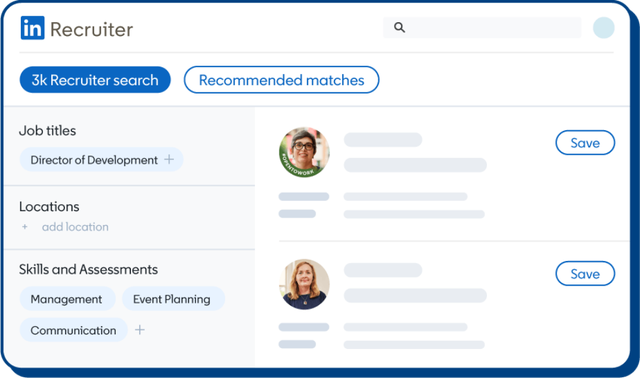
HR teams can also use AI-powered recruiting platforms like LinkedIn Recruiter to find and engage the right high-quality candidates quickly. LinkedIn Recruiter offers boolean search strings with quotes and modifiers like “and” or “not,” plus 40+ advanced filters to help recruiters find top talent. Filter profiles by job titles, location, experience, and required skills.
LinkedIn Recruiter users boosted InMail response rates by up to 20% by contacting professionals using advanced search filters like “Open to Work.”
Recruiters can save custom, optimized searches to reduce repeated, manual tasks and improve screening processes and time-to-hire efficiencies. Real-time LinkedIn data helps employers understand candidate demographics, skills gaps, and salary benchmarks. Discover a candidate’s potential interest with spotlights like “Interested in Your Company” and InMail acceptance rates to find the best hiring fit.
Trends and predictions for the future of AI in recruitment
Emerging AI recruitment trends that will impact future candidate experiences and HR team efficiencies:

Data privacy and ethical considerations
Here are some privacy and ethical considerations to keep in mind when using AI-powered recruiting tools:
Address data privacy and security concerns
AI recruiting systems process large amounts of personal candidate data, raising privacy and security concerns. Recruiting teams must take data protection measures to comply with government regulations like the California Consumer Protection Privacy Act (CCPA) and the EU’s General Data Protection Regulation (GDPR). Additionally, obtain candidate consent before using their data.
Explain AI’s role in hiring on HR or recruitment websites to ensure candidates know precisely how an organization uses their data. Candidates should have an easy way to inquire about and contest any AI-driven decisions made during the hiring process.
Businesses should frequently audit their AI-powered systems for data breaches and vulnerabilities. Create a process for continuously evaluating security measures taken by AI-powered platforms in your tech stack. Review recruiting team best practices frequently and monitor new ethical usage trends and guidelines.
Mitigate biases, ensuring diversity and inclusion
Develop clear guidelines and policies for using AI-driven decisions in recruitment processes to avoid discriminatory hiring outcomes and unconscious human biases. When developing and training AI models, use diverse and representative datasets.
Create ways to quickly detect data biases using mitigation techniques and adjust algorithms whenever issues arise. Additionally, conduct regular audits to ensure output fairness and the AI platform’s compliance with ethical hiring standards.
Human recruiters should always review and validate AI-driven candidate recommendations and ensure human oversight in hiring decisions. Likewise, ensure candidates interact with human recruiters throughout the hiring process.
Generative AI early-adopters and thought leaders to follow
Recruitment and HR teams can follow thought leaders and generative AI experts to learn more about emerging trends and issues impacting their hiring processes. Here are a few noteworthy experts on AI in recruitment and the workplace:



Stay ahead of the AI curve with LinkedIn Recruiter
AI recruiting technology has a bright future, enabling teams to personalize and streamline candidate screening and hiring processes. Ensure your recruiting team understands and experiments with new AI recruitment technologies, sharing useful prompts and best practices with colleagues.
LinkedIn Recruiter’s advanced search functionality and filters, AI-powered templates and tools, intelligent candidate recommendations, third-party software integrations, and predictive analytics solutions help teams quickly find and engage the right candidates — building resilient pipelines and reducing hiring times.
Learn about AI-powered hiring tools and how to acquire top talent on LinkedIn.
An experienced sales specialist is here to help find the best solution for you.
An experienced sales specialist is here to help find the best solution for you.