
| Hire
Future of Talent Report
Beyond Hiring: The Rise of Talent Orchestration
This is one of the hardest eras talent acquisition has ever faced. Global hiring remains 30% below pre-pandemic levels while applications per applicant are up 30% over the same period. Organizations are under pressure to move faster, even as AI transforms how work gets done.
Talent leaders are being asked to build the workforce of the future while the ground shifts beneath them. And yet, 85% of talent leaders believe their function is entering its most influential era.
Why?
Because the same shifts that made the job harder also made it more consequential.
The future of talent acquisition is expanding beyond hiring. It's about helping organizations decide how work gets done and orchestrating the people, skills, and capabilities needed to achieve business outcomes.

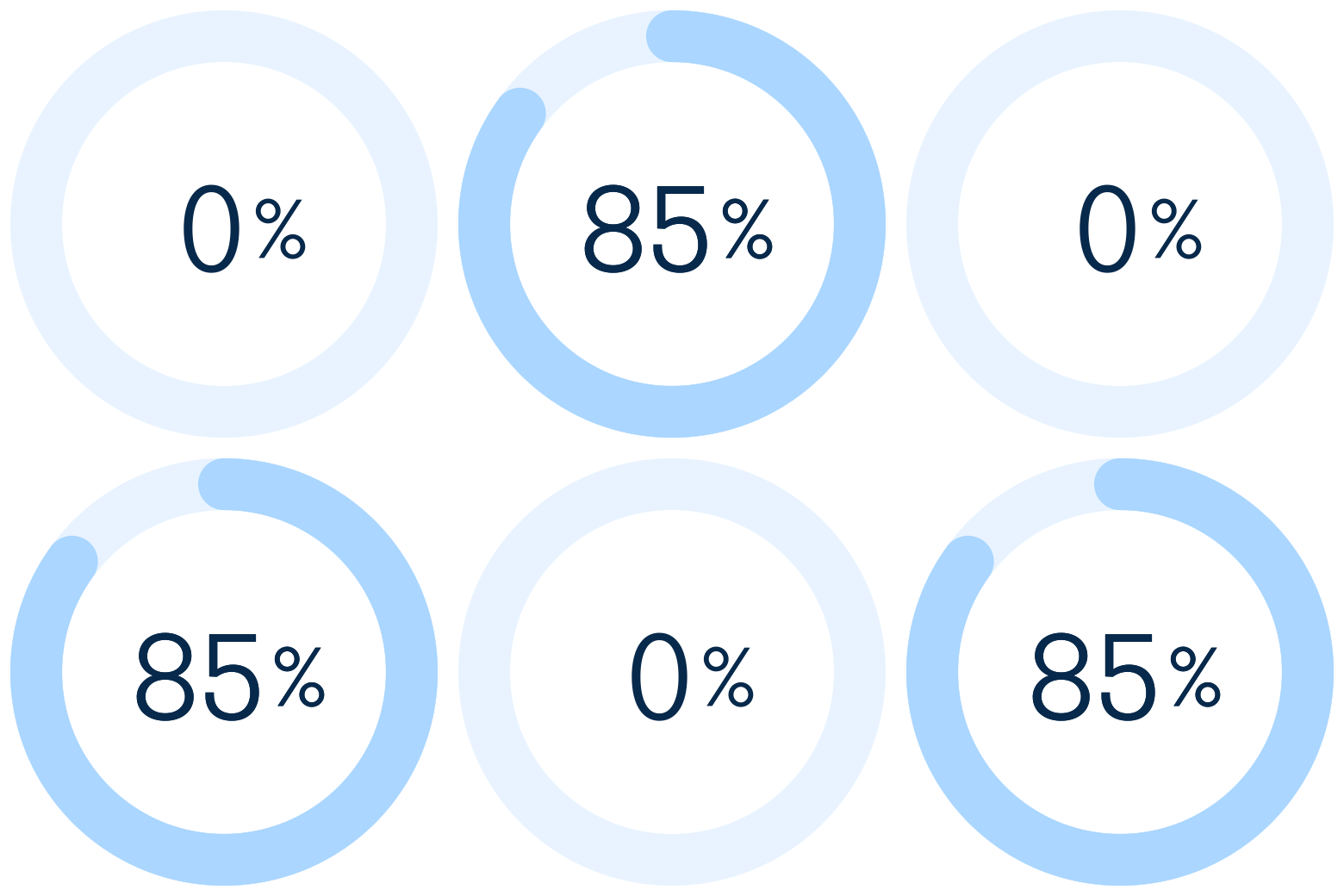
Talent leaders believe TA is entering its most influential era yet.
The Hiring-Centric Organization Is Transforming
If acquisition is about filling jobs, orchestration is about resourcing work thoughtfully. It involves coordinating people, processes, data, and AI to make more informed workforce decisions and connect hiring, development, mobility, and workforce planning around business outcomes.

What if the future of talent already exists?
We isolated a small group of AI-frontier talent leaders. They're already building the talent function most organizations are still debating. Across planning, team design, skills visibility, mobility, and measurement, their practices look fundamentally different from their peers. This report explores the future they're building toward.
The operating model that separate orchestrators from recruiters
- The Model
- The Team
- The Signals
- The Metrics

Resourcing work not roles.
The question shifts from "Who should we hire?" to "How should we get this work done?” breaking the divide between Talent Acquisition and Talent Management.
The Acquisition Model
| 1 | 2 | 3 | 4 |

Team or Function Level Need


Open Requisition

Hire

Work Gets Done

Talent challenges are hiring challenges.
Click to expand
The Orchestration Model

Business Objective

Understanding Workforce Capabilities & External Market Dynamics
Shared view of skills, capacity, talent supply & demand

Choose Workforce Strategy

Internal Capability
Leverage
Develop
Redeploy
Retain
External Capability
Hire

Business Outcome
Talent challenges are visibility challenges.
Click to expand

81% of talent leaders believe winning talent organizations will start every conversation with the desired business outcome, not a mandate to hire.
AI-frontier talent leaders are nearly 2x more likely to strongly believe this.
What talent orchestration looks like in practice


TA's remit is ultimately making sure we have the right people in the right seats to deliver against our business goals, whether that's technology, tools, internal talent, or borrowed capacity. Whether you're recruiting today or in a talent advisory role in the future: how do we get this work done, and who does it?"
Jennifer Tulk Courtis
Global Head of Talent Acquisition, Mastercard

The Model

The future recruiter: from strategic advisor to career concierge
New opportunities will emerge for today’s recruiters as the role evolves beyond traditional hiring execution.
 The Headhunter
Your Executive Recruiter Scaled
The Headhunter cultivates long-term relationships through high-touch experiences.
2.5x
Frontier talent leaders are 2.5x more likely to believe their organizations will significantly increase investment in high-touch human engagement, such as curated events and long-term relationship building, to attract and win top talent.
44%
Nearly half of frontier talent leaders believe future recruiters will rely on creative sourcing strategies like intimate in-person events to engage hard to find or high value talent.
 The Advisor
Your Talent Partner and Planner
The Advisor turns talent intelligence into workforce strategy and guidance.
10x
Management as a skill is now 10x more likely to appear in recruiter job postings than it did a year ago (13.2% vs. 1.3%). Business as a skill is now 4.7x more likely to appear in recruiter job postings than it did a year ago (8.8% vs. 1.9%) (Jan-Jul 2025-2026). Recruiter job descriptions start to read less like talent acquisition specialists and more like business partner roles.
2.1x
2.1x - Strategic Talent Advisor is the largest senior talent category and its share of job postings has doubled year-over-year (Jan-Jul 2025-2026).
 The Architect
The Experience Architect & Agent Owner
The Architect designs and owns AI-enabled hiring funnels, user experience, and talent agents.
1.6x
Frontier talent leaders are 1.6x as likely to believe future recruiters will design and optimize AI-enabled recruiting funnels by role, skill, and seniority.
43%
Many frontier talent leaders believe future recruiters will be responsible for applying predictive analytics to improve hiring decisions and long-term outcomes.
 The Concierge
A Proactive Career and Mobility Guide
The Concierge proactively retains, redeploys, and guides critical internal talent.
36%
More than one-third of frontier talent leaders believe future recruiters will support retention, internal mobility, and talent redeployment.
16%
Some frontier talent leaders believe “career guidance” is a top three most important recruiter skill, one they look for today that may not have been required even one year ago.
Talent teams turn signal into strategy
Recruiters move into consultative roles
Internal role changes on the LinkedIn platform reveal that Recruiters are increasingly stepping into Talent Acquisition Partner roles, and Business Partner roles – titles that signal consultative partners rather than transactional sourcing.
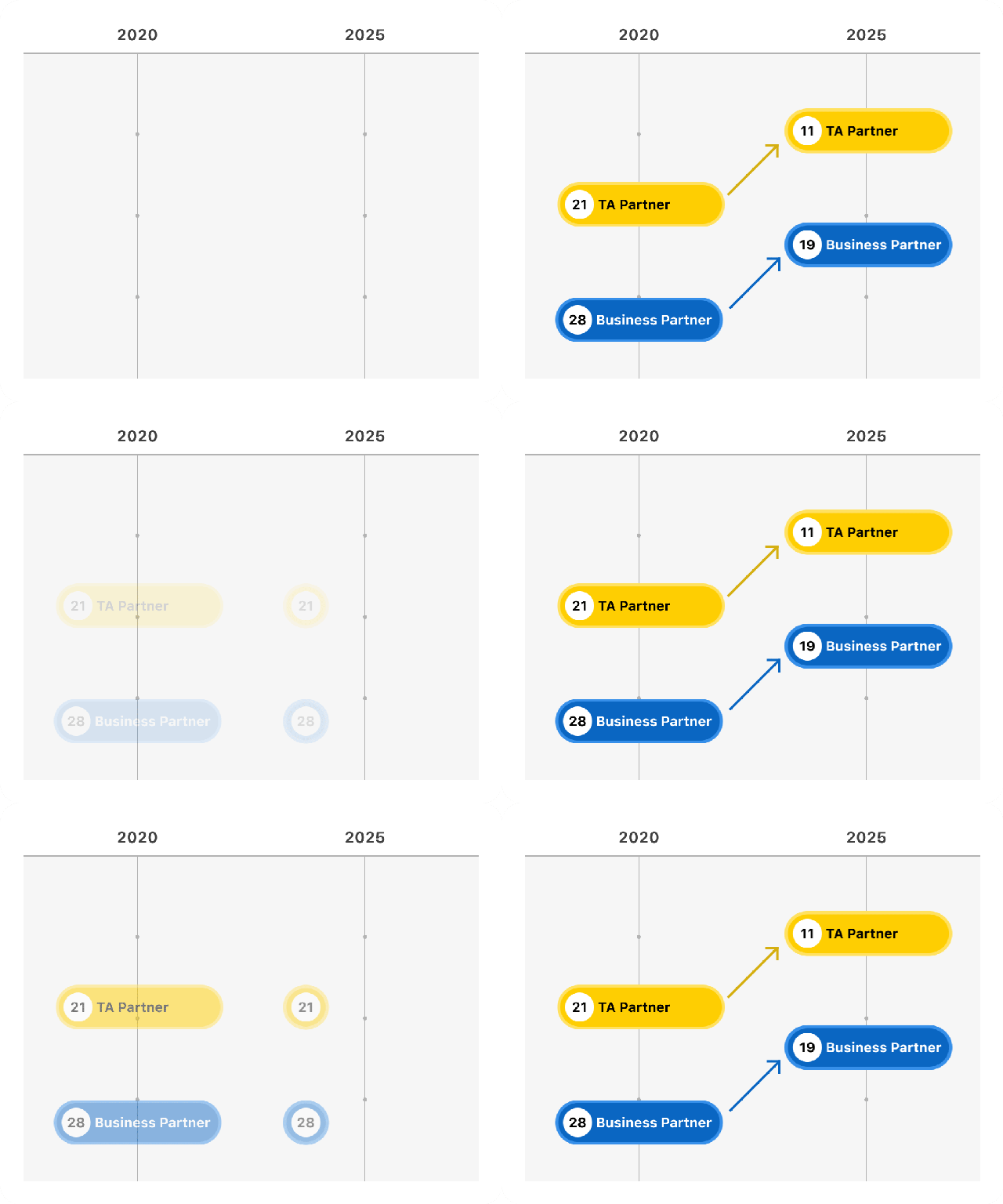
Intelligence roles are on the rise
There is rising demand for roles that interpret and advise on talent and market signals. Companies are investing in both talent intelligence and consultative, advisory talent expertise.

Talent Intelligence was the top emerging role category, with its share of job postings up 3.2x year over year.
(Jan-Jul 2025-2026).

Strategic Talent Advisor is the largest senior talent category and its share of job postings has doubled year over year.
(Jan-Jul 2025-2026).

We’re calling our recruiters talent advisers. We rebranded ourselves because we wanted them to move past the tactical processing of resumes and see themselves as advisers who could have really important, strategic conversations with hiring managers and business leaders.”
Tiffany McGowen
Senior Executive Vice President of HR and Talent Acquisition, Paycom
The Team

Evidence and authenticity unlock hiring efficiency. Not AI alone.
Trust is the #1 hiring-integrity topic recruiters are discussing on LinkedIn.
Recruiter conversations about trust have doubled YoY*, spanning topics like authenticity, candidate verification, and separating signal from noise. As polished content becomes easier to manufacture, verification, authenticity, and proof of work become even more valuable.
*Analysis of U.S. recruiter conversations on LinkedIn platform.

Frontier talent leaders are more likely to strongly believe:
Verification of skills will replace the traditional resume as the most trusted candidate signal.

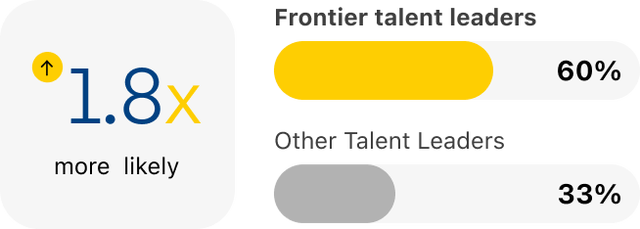
Social signals, such as mutual connections, endorsements, and comments, will be more heavily utilized in hiring decisions.

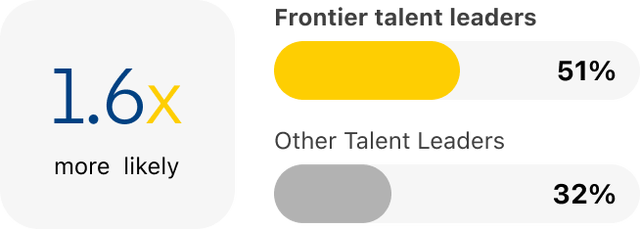
Referral programs and professional networks will be more heavily utilized to help cut through the noise.

In a world where AI can generate a resume in 3.2 seconds, the resume doesn’t matter as much. You need more signal and depth versus volume.”
Becky McCullough
VP Talent & People Experience, HubSpot
On LinkedIn today

99.5% of detected fake accounts are stopped proactively before they’re ever reported.

100M LinkedIn members are verified via identity authentication (Gov ID or CLEAR).
The Signals

The hire isn’t the finish line.
98% of frontier talent leaders believe metrics will extend beyond the hire, from point-in-time snapshots to talent lifecycle health. While quality of hire remains the #1 priority, leaders will increasingly measure what happens after the hire is made.
How effectively did we hire?
How effective is our hire?
Quality of Hire: By Opinion
Manager satisfaction
90-day check-in
Quality of Hire: By Outcomes
Business impact
Measured over time
Hiring Efficiency
Time-to-fill
Cost-per-hire
Talent Value
Time-to-productivity
Results delivered
Recruiting Funnel Performance
Offer acceptance rate
Interview-to-hire conversion
Talent Lifecycle Health
Internal fill rate
Critical-talent retention
AI-frontier talent leaders are more likely to strongly believe:
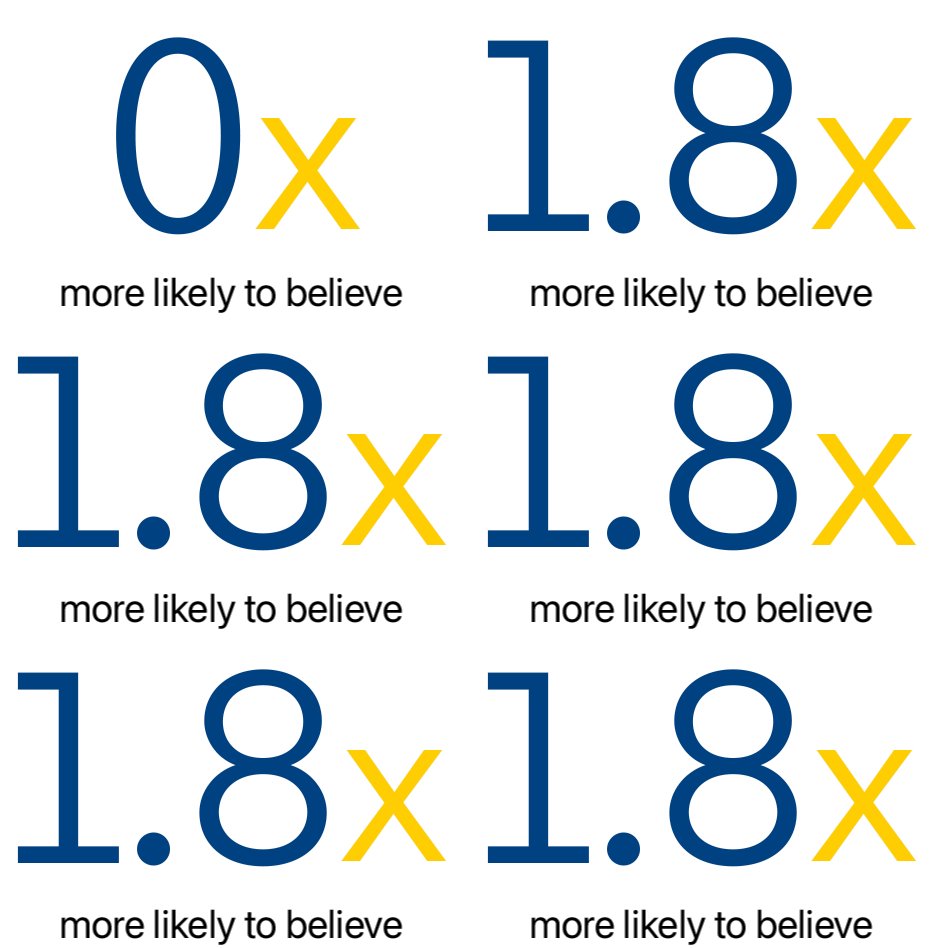
Talent metrics evolve to measure talent lifecycle health
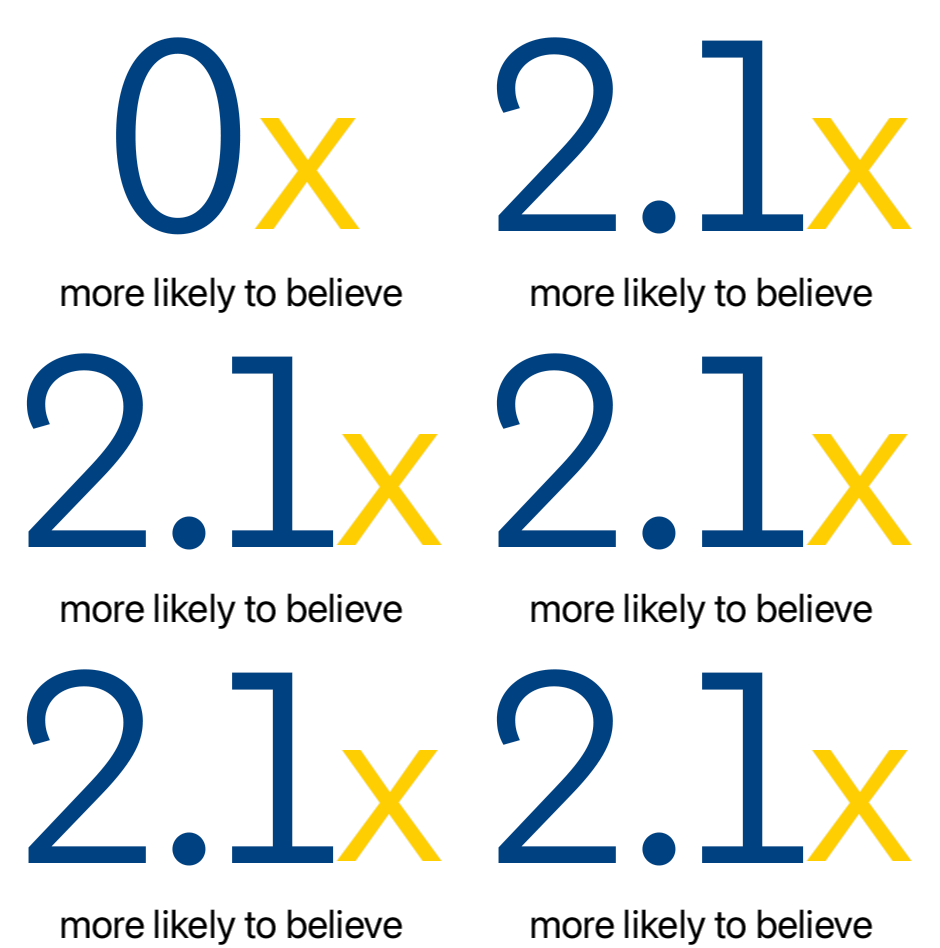
Talent functions come together to solve for the entire talent lifecycle

The metrics will change, from time to fill to time to productivity, from offer acceptance rate to quality of hire, retention, internal mobility. This body of work should be driving more than just efficiency gains. It should be driving higher quality talent and higher quality experiences."
Scott McGuckin
VP Global Talent Acquisition, Cisco
The Metrics
Peer Perspectives

Jennifer Tulk Courtis
Head of Global Talent Acquisition, Mastercard
Ben Olson
VP Global Talent Acquisition, LinkedIn


Anna Anderson
Director of Talent Acquisition, Capital Group
Becky McCullough
VP Talent & People Experience, HubSpot


What future are leading talent teams building towards?

"Quite frankly, these are probably the most exciting years of my entire career. We are literally at the forefront."

Melanie Dazzo
Vice President of Global Recruiting, Samsara
Unlock your TA transformation today

Hiring Assistant 2
Bring richer intelligence into your hiring decisions by combining company context, trusted talent signals, and AI-powered insights so recruiters can focus on the human aspects of hiring.

Talent Velocity Research
Explore the skills reshaping work and learn how your organization can build the talent agility needed to thrive in an AI-powered future.

LinkedIn Learning Career Hub
Help employees discover roles, projects, and learning opportunities where their skills can create the greatest impact, while giving your organization greater visibility into internal talent and workforce capabilities.
Frequently asked questions around the future of talent:
Talent Acquisition is expanding beyond hiring. As AI reshapes work, talent leaders are increasingly helping organizations decide how work gets done, balancing hiring, internal mobility, skill development, workforce planning, and AI-enabled capacity to achieve business outcomes.
Talent Orchestration is the practice of coordinating people, skills, data, processes, and AI to make better workforce decisions. Instead of starting with a hiring request, organizations start with the business outcome they want to achieve and determine the best combination of talent, skills, and technology to deliver it.
Traditional Talent Acquisition was designed to fill roles. Today, organizations need to continuously evaluate whether work should be hired for, developed internally, redeployed, augmented with AI, or supported through flexible talent models. Talent Orchestration helps organizations make these decisions more strategically and effectively.
LinkedIn helps talent teams move from transactional recruiting to strategic talent leadership with talent intelligence, hiring insights, trusted talent signals, and AI-powered recruiting tools. This enables recruiters to spend less time on administrative work and more time advising the business and building talent relationships.
LinkedIn helps organizations connect hiring, learning, skills, career development, and workforce planning through a shared understanding of talent. By bringing together workforce insights, skills intelligence, and AI-powered solutions, organizations can build a more agile, connected, and future-ready talent ecosystem.
Methodology & acknowledgments
This research surveyed 771 HR and Talent Acquisition leaders at organizations with more than 1,000 employees who have influence over, or decision-making responsibility for, Talent Acquisition's organizational structure and cross-functional collaboration. The survey was fielded in June 2026.
Surveyed geographies include: United States (n=200), United Kingdom (n=131), France (n=125), Germany (n=129), India (n=126), and Australia (n=60).
Surveyed organizations include companies with 1,001-5,000 employees (51%), 5,001-10,000 employees (34%), and more than 10,000 employees (15%). Respondents represented a range of senior HR and talent leadership roles, including CHROs, Heads of HR, HR leaders, and Talent Acquisition leaders.
The analysis of AI-frontier talent leaders compares two groups of survey respondents: AI-frontier talent leaders and all other talent leaders (referred to as “peer set”).
AI-frontier talent leaders were identified using three criteria. Respondents qualified as AI-frontier talent leaders if they: 1) selected the highest level of AI adoption maturity in recruiting (“optimizing”), indicating that AI is core to how recruiting operates and is actively measured and refined; 2) reported significant AI impact across five or more recruiting outcomes; and 3) reported a high degree of agency in their role.
Comparing AI-frontier talent leaders against all other talent leaders provides insight into how organizations at the forefront of AI adoption are approaching talent strategy, recruiter capabilities, organizational design, and the future of hiring differently.
Behavioral insights for this report were derived from the billions of data points generated by 1 billion members and 5 million profile updates per minute. Specific analysis featured included:
- Recruiters internal movement: Data reported on the internal roles recruiters were moving into and how those transitions changed from 2020 to 2025.
- Emerging talent job categories: Analysis of hiring demand and job posting trends to identify the fastest-growing talent and recruiting-related job categories (Jan-July, 2025-2026). Analysis reports on the share-of-job postings per 10,000 jobs to account for market dynamics.
- Emerging recruiter & TA professional skills): Analysis of skills appearing in Recruiter and Talent Acquisition job postings to identify the capabilities growing most rapidly in demand (Jan-July, 2025-2026).
- Recruiters conversations: An analysis of recruiters conversations on the LinkedIn platform and how topics have grown or changed over time (YoY).
The perspective in this report was informed by conversations with innovative talent leaders around the world, to whom we owe our sincere thanks, including:
Anna Anderson at The Capital Group
Anastacia Flores at Snap Inc.
Becky McCullough at HubSpot
Ben Olson at LinkedIn
Blair Bennett at PepsiCo
Brian Riley at Riot Games
Dan Reid at LinkedIn
Dan Schawbel at Workplace Intelligence
Dan Stevens at Palo Alto Networks
Darius Minaee at LinkedIn
Deanna Pathak at Klick Health
Erin Scruggs at Microsoft
Glen Cathey at Randstad
Hari Srinivasan at LinkedIn
Jennifer Tulk Courtis at Mastercard
Liam Walsh at LinkedIn
Markus Graf at Nestlé
Magnus Lundbäck at Getinge
Melanie Dazzo at Samsara
Naphtali Bryant at RAC Leadership
Natasha Pillay-Bemath at IBM
Noel Brown at HSBC
Rohan Rajiv at LinkedIn
Ryan Decoste at Klick Health
Sankar Venkatraman at LinkedIn
Sarah Leydon-Anand at LinkedIn
Scott McGuckin at Cisco
Sophie Wade at Flexcel Network
Tiffany McGowan at Paycom
Tracey Friend at Global Payments
Survey Data
Stephanie Scalice
Content
Satta Sarmah Hightower
Sadie Jameson
Krystal Thomas
Kexin Chen
Ainsley O’Malley
LinkedIn Platform Insights
Adriana Zurbano
Cesar Zulaica Pineyro
Vince Wong
LinkedIn Economic Graph Institute
Jamila Smith-Dell
Sharat Raghavan
Talk to a specialist now
Learn more about LinkedIn Ads