
| Hire
Top Survey Questions for New Hires at Every Stage of Onboarding

A strong onboarding experience helps new hires become productive, engaged, and connected to your organization. Onboarding surveys give employers direct feedback on what's working, where employees may be struggling, and how to improve the overall experience.
This guide explains how onboarding surveys help organizations improve new employee experiences. Learn which onboarding survey questions provide actionable insights, and get expert tips to enhance hiring processes.
What is an onboarding survey?
An onboarding survey is a structured feedback tool given to new hires during their first days or weeks at a company. Also called a new hire or engagement survey, onboarding surveys let new hires anonymously tell businesses how they think and feel about the hiring process and ramp-up period of starting a job. It might include questions addressing the employee’s role clarity, resource readiness, and cultural integration.
Employers use the survey results to intervene quickly when onboarding experiences are unsatisfactory and to improve the company culture. These surveys demonstrate that employers care about new hires’ experience, opinions, and well-being.

How to create onboarding survey questions: 5 best practices

1. Match the onboarding survey to the individual
Customize onboarding surveys for specific roles and hiring situations, such as on-site or remote employees and full-time or contract workers. Generative AI platforms like Chat GPT make drafting and personalizing onboarding surveys faster and easier.
2. Conduct multiple onboarding surveys and adjust questions over time
Survey new employees after their first week on the job to understand their initial impressions and how they get along with managers and co-workers. Some employers also use “preboarding” surveys to measure how well HR teams have prepared new hires for their first day of work. Reboarding surveys also help evaluate how well remote employees or those returning from maternity leave or disability adjust to working in-house.
Send milestone surveys at the 30-day, 60-day, and 90-day marks to evaluate whether new hire experiences have improved or decreased. HR teams can survey employees again after six months to gauge whether the honeymoon phase has ended or if new hires are still happy in their roles.
3. Keep onboarding surveys short and sweet
Repeat onboarding questions in later-stage surveys to compare changes in sentiment over time. Good onboarding surveys are short and straightforward. Customize repeated questions relevant to the role or time interval. Employees should stay thoughtfully engaged throughout each survey.
4. Allow for anonymity, employee relevancy, and deep insights
Encourage new employees to raise any red flags they can see so far. Remember that anonymity allows for honesty and ensures respondents can request help if something isn’t right. Allow employees to skip responses when their answers are not applicable. Likewise, provide ample time and space to expand on their responses to the most relevant questions.
5. Clarify that negative responses are welcome
Make it clear that new hires’ thoughts and feelings are essential to the organization and that leaders take their answers, even when negative, very seriously. Otherwise, new hires will sense that leaders only want positive employee feedback and tell HR teams what they want to hear.
Types of onboarding survey questions for new hires
Use varying questions to collect crucial data points for improving the onboarding experience.

Scale-based questions
Often called Likert scale questions, scale-based questions require respondents to select a number on a scale of 1 to 5 or 1 to 10. The lowest number usually reflects a “less likely” or “less satisfied” answer, and the highest reflects the best likelihood or satisfaction level.
Advantages: Scale-based questions give HR teams a quick snapshot of employee satisfaction.
Disadvantages: If satisfaction is low, these questions cannot get to the root of the issue. Vary survey question types (e.g., using true-or-false, open-ended, and Likert scale questions) so employees don’t unknowingly provide only positive or negative responses.

Open-ended questions
Letting new hires share their deepest concerns, negative experiences, or positive testimonials is critical.
Advantages: Employees feel they have a safe space to vent about crucial topics. Get a 360-degree view of the biggest onboarding challenges to improve the onboarding process or address major concerns.
Disadvantages: Reviewing and addressing long responses can be time-consuming. Consider limiting the length of survey responses or providing an email address or phone number that new hires can use to share longer and more nuanced responses.
Binary questions
New hires can select from two possible answers to each question: yes or no and true or false.
Advantages: HR teams can quickly determine whether employees enjoyed the onboarding experience and save employees significant time.
Disadvantages: These questions provide a black-and-white snapshot of the onboarding experience. Use them with open-ended questions to uncover deeper issues.
Multiple choice questions
Provide a list of pre-written responses from which new hires can select to describe their onboarding experience.
Advantages: It saves new hires time, making them more likely to complete the questionnaire.
Disadvantages: These survey responses might leave out information that HR teams might have overlooked.
Top onboarding survey questions: Topics, types, and timing
LinkedIn’s Future of Recruiting report reveals that human skills like communication, relationship-building, and adaptability are the top three recruiter skills cited by hiring pros. Being adaptable and open to learning new things will be especially important for recruiters using AI-powered recruitment tools like LinkedIn Recruiter.
How to evaluate and measure onboarding survey results
1. Examine survey response rates
These rates are the percentage of employees who completed each survey. HR teams can evaluate response rates based on office locations, roles, gender, age, ethnicity, and departments and adjust surveys accordingly.
2. Evaluate satisfaction over time
Compare positive and negative responses regarding role satisfaction, HR or management processes, peer relationships, and career outlook as new hires progress from preboarding to post-honeymoon phases.
→ Did new hire positivity and satisfaction improve or decrease over time?
→ If perceptions or satisfaction decreased, at which stage in the onboarding process do they tend to drop off?
→ How did new hire satisfaction and perceptions change after the honeymoon phase?
Evaluate satisfaction by office locations, roles, gender, age, ethnicity, and department to help business leaders make necessary changes.

Engage and hire top talent with LinkedIn
Use onboarding surveys to gather feedback and improve new hire experiences, boosting employee retention rates. These surveys show new hires that HR teams care about their job satisfaction and value honest feedback.
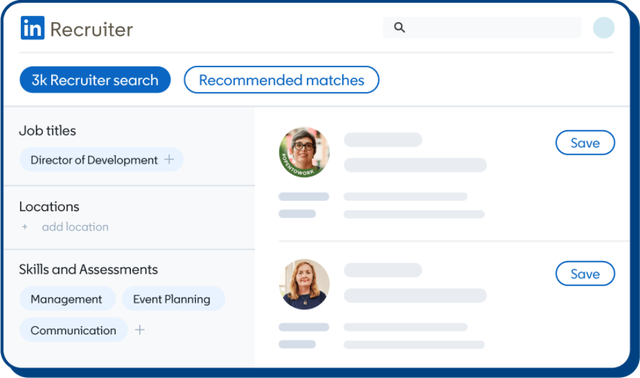
LinkedIn helps recruiters streamline and personalize the candidate engagement and hiring process. LinkedIn Recruiter’s advanced search functionality and filters, AI-powered messaging templates, intelligent recommendations, and predictive analytics help teams quickly find and engage top talent.
Learn more about providing positive, personalized candidate experiences with LinkedIn Recruiter.
An experienced sales specialist is here to help find the best solution for you.
An experienced sales specialist is here to help find the best solution for you.