
Want Higher InMail
Acceptance Rates?
Want Higher InMail
Acceptance Rates?
Here's The Best Data for Reaching Out
Here's The Best Data
for Reaching Out

What does an InMail represent?
For business professionals, InMail represents an opportunity to connect with potential clients. InMail is 3x more likely to be accepted than a cold call and 6x more likely than email.
A single InMail you send between sips of your morning coffee could ultimately lead to the biggest deal of your career. Or, at a minimum, bring you one step closer to your goals. Then again, an InMail could also mean nothing. If the person doesn’t accept it and respond to it, it’s just words in the ether.
How do you increase your InMail acceptance rates? You’ve come to the right place. We've uncovered 4 best practices for sending InMails.


Researching your prospect and their organization before sending an InMail has a massive payoff.
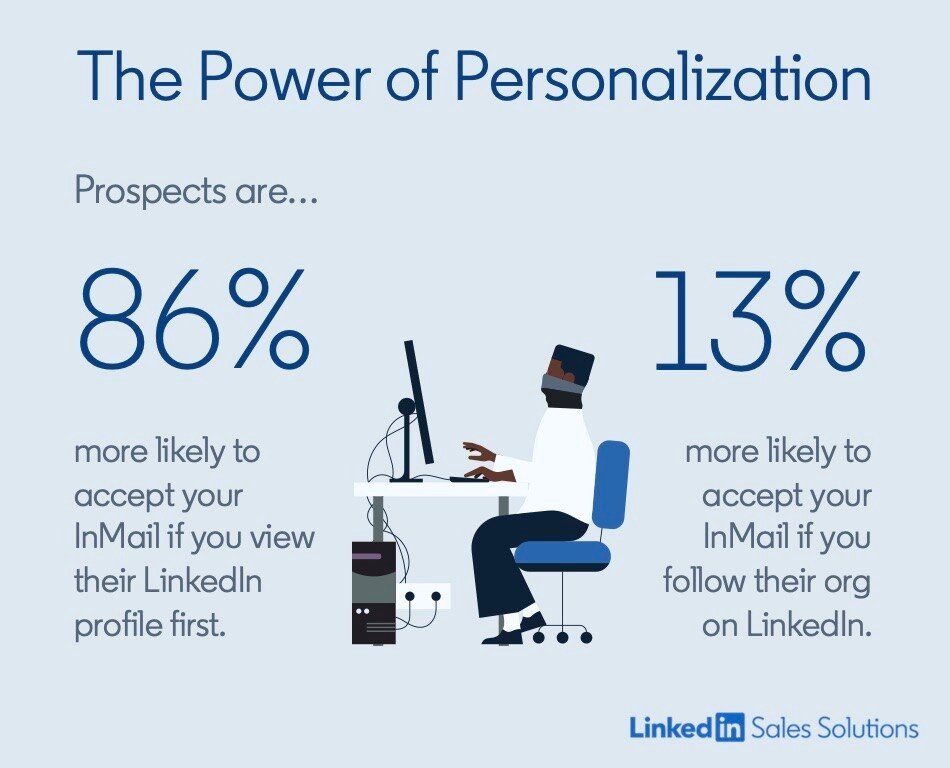
If you view a person’s LinkedIn profile and then send an InMail, that person is 86% more likely to accept it. And, the more you view someone’s profile, the more likely they are to accept your InMail.
Why? Viewing a person’s profile for the sake of viewing their profile is meaningless. The bigger point is it means you’ve done some research on the person, which will help you to write a more personalized InMail when you do reach out.
The same goes for researching a person’s organization before InMailing. If you follow a prospect’s organization on LinkedIn before reaching out, they are 13.1% more likely to accept your InMail.
Why? Same reason. Following your prospect’s organization is meaningless on its own; what it gives you is insight into what that organization is focused on. If you can tailor your InMail around what their organization is focused on, your prospect is much more likely to accept it.
This all jives with what we hear from sales experts – the key to getting higher InMail acceptance rates is sending relevant, personalized messages. The data backs it up.


Having a strong LinkedIn presence leads to more people accepting your InMails.
Salespeople hear a lot about building out their brand on LinkedIn and positioning themselves as thought leaders. But does it really work?
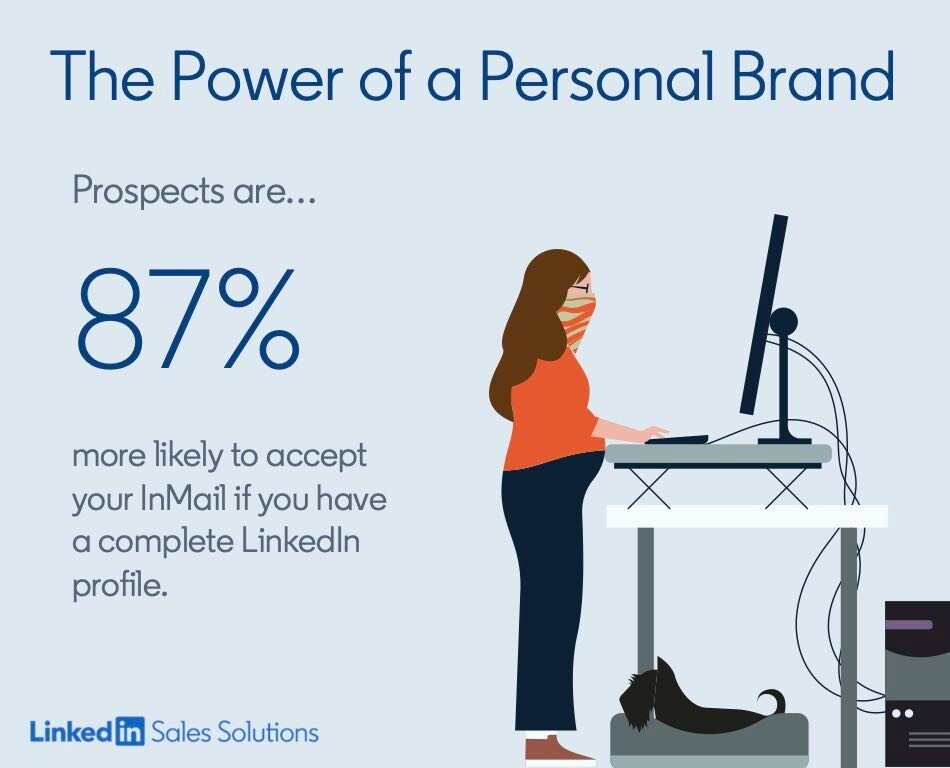
The data says yes. Specifically, having a complete LinkedIn profile can lead to an 87% increase in InMail acceptance rates, our analysis found.
The reason why – our study found that salespeople’s profiles are viewed at twice the rate of the normal professional. Meaning, people are likely to research you and use that to decide if they will accept your InMail or not.
What message are you sending to buyers, with your LinkedIn profile? Are you somebody who is warm or engaging, with a solid photo and a good summary, who has some credibility in the space they are selling into? Or, is your LinkedIn profile bare, making it feel like the InMail came from a bot?
Rock your LinkedIn profile now.


Encourage your company to build out its brand on LinkedIn, too.
You are a brand, but the company you work for also is a brand too. And the more your company works to build out its brand on LinkedIn, the easier it’ll be for you to sell.
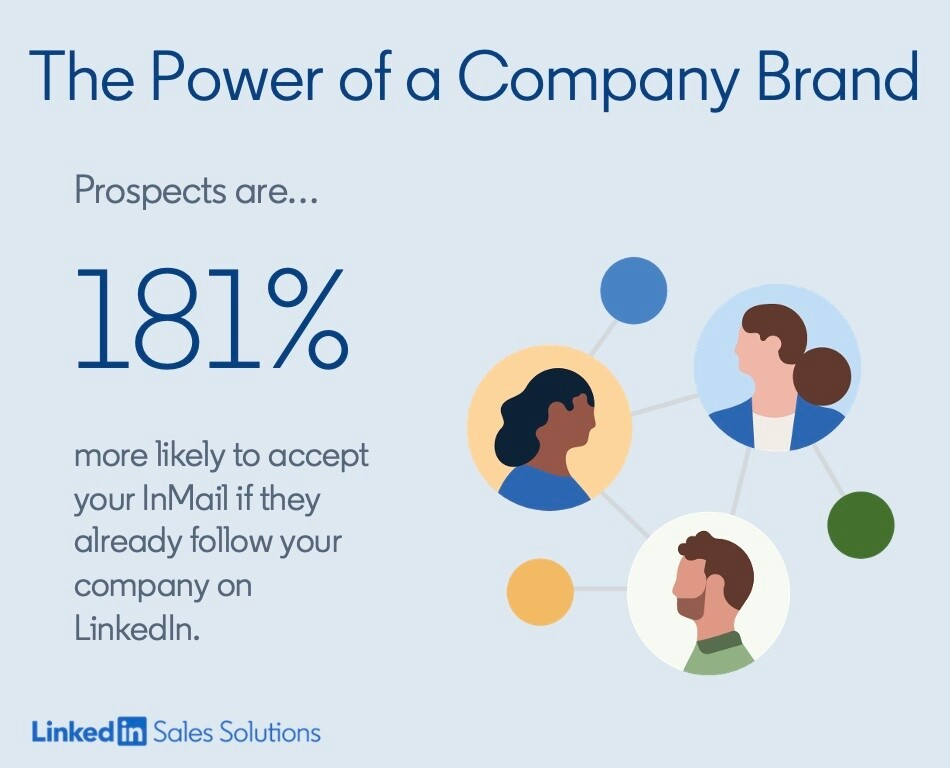
Case-in-point – there are massive tailwinds to your company building out its following on LinkedIn, for you as a seller. That’s because, if a prospect follows your company on LinkedIn, they are 181% more likely to accept your InMail. One-hundred-and-eighty-one percent!
Granted, this might not be in your control, as a seller. But, if both you and your company work to build out your collective brands on LinkedIn, both will benefit.


People are much more likely to accept an InMail if they just started a new job.
When is a good time to send an InMail to a prospect?
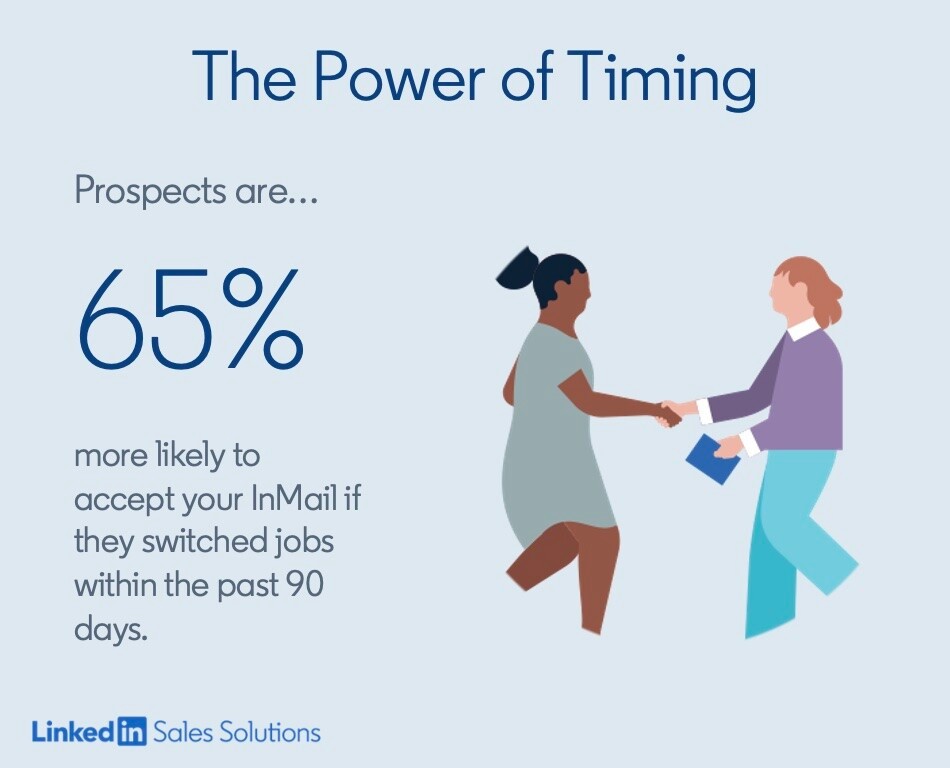
According to the data, shortly after someone starts a new job. As people who changed jobs within the past 90 days are 65% more likely to accept an InMail, versus everyone else.
This makes sense, as when someone starts a job, they often want to put their imprint on it. They want to explore new options.
The best news – we’re currently in a Great Reshuffle, where job switching is spiking globally. Based on the data, it means opportunity is spiking globally, too.
The key to getting these recent job switchers to accept your InMail? While your odds are improved already, they will skyrocket if you send them a personalized, relevant message.

The takeaway: Ultimately, InMailing effectively is about really understanding your buyer.
This data cements what sales experts have been saying for years – selling is about being buyer first. When it comes to InMailing specifically, the more you can make it about the buyer, the more likely they are to respond.
The data also hints at the worst way to InMail – by blindly spraying, the “quantity over quality” approach. Not only is this ineffective, it damages you and your company’s reputation over time.
Additionally, the best InMailers also understand that all senders aren’t created equal. If they can establish themselves on LinkedIn as a trusted industry voice, then when they do send an InMail, it’s far more likely to be opened and accepted.
Bottom line, there’s no “shortcut” to InMailing. Getting the most out of it comes down to work – putting the work in to build your own brand and putting in the work writing each InMail.
That work has a massive payoff though. The hope is this data will help you focus your efforts, and you will start reaching out more efficiently today.
* The data in this article was provided by LinkedIn Insights.
Optimize your sales approach with LinkedIn Sales Navigator
Achieve your sales goal with B2B data you can trust.